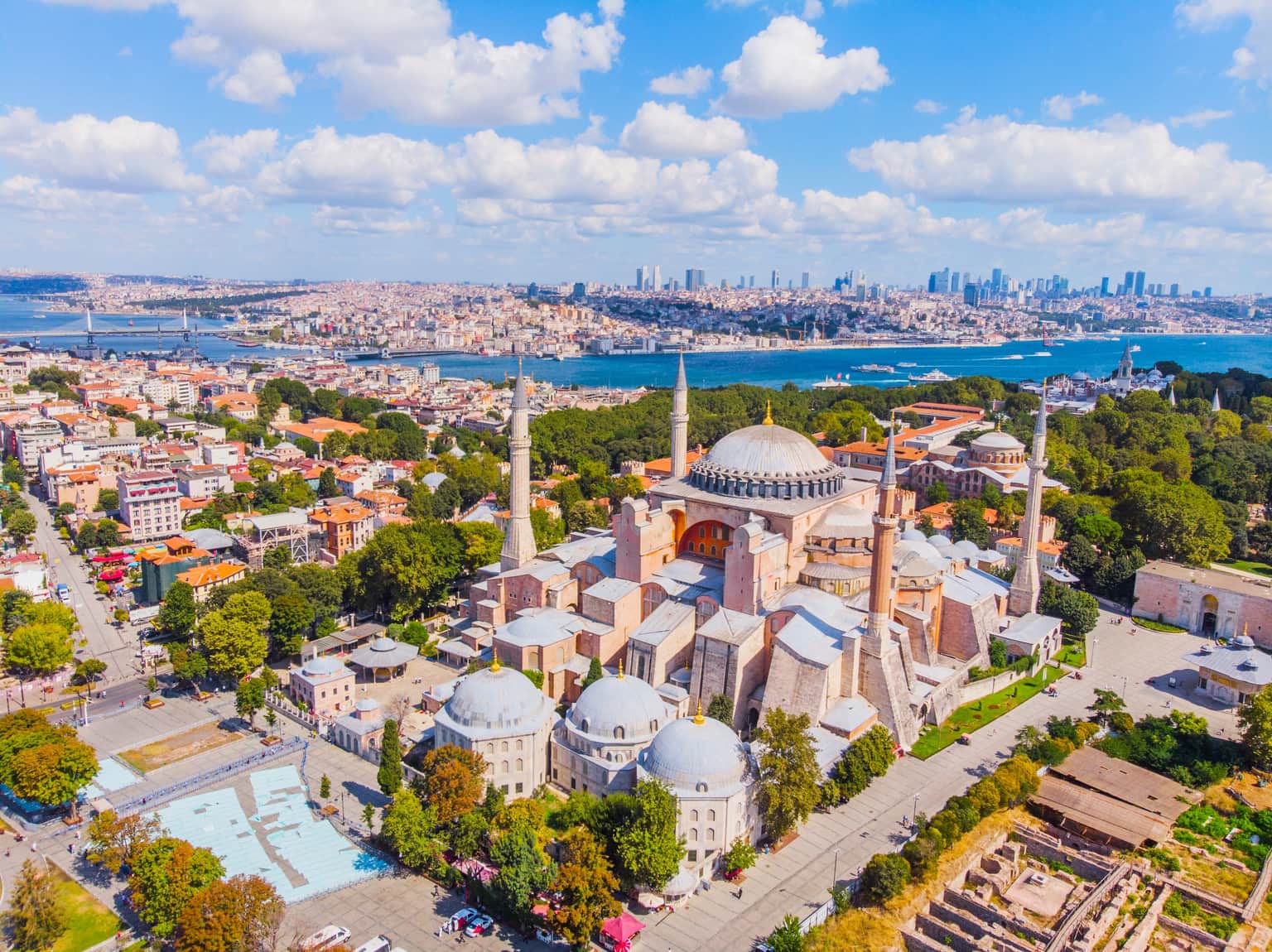
Location: Hagia Sophia Museum is located in Istanbul, Turkey. Istanbul was known as Constantinople in the times gone by.
Distance from Istanbul Airport: The museum, Hagia Sophia is located at a distance of 48 km from the international airport of Istanbul.
History of Hagia Sophia

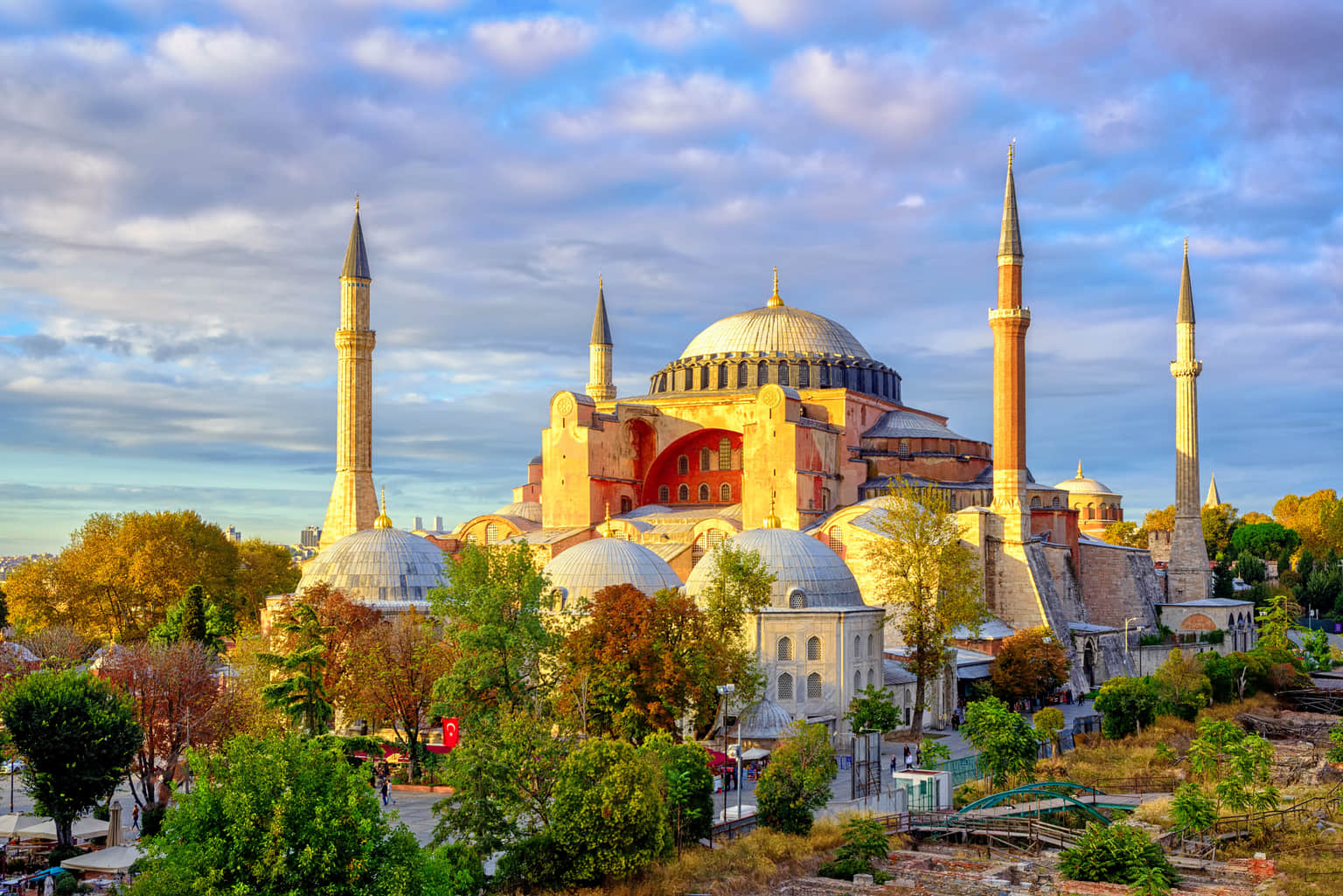
Hagia Sophia, an enormous architectural marvel in Istanbul Turkey was initially constructed as a Christian Basilica in 532 AD. It has been one of the significant symbols of the city for more than 1500 years because of its mammoth structural presence and artisanship.
It has been associated with all the matters of international politics, art, architecture and religion as well. The cathedral had also served as a mosque before it was converted into a museum displaying exhibits of the bygone times.
In the initial days, it was built with a wooden roof after its very first commissioning. In 404 AD, it was burned down to ashes in the course of the riots in Constantinople. It was rebuilt by the successor of Arkadious, Emperor Theodosios II in 415 AD. Hagia Sophia was built with five naves and an impressive entrance.
The wooden roof was once again used in the second phase of construction. Even the reconstruction could not make it for a longer period. It was subjected to fire for the second time during the Nika Revolts that kicked up against Emperor Justinian I.
The damage was so fatal that it could not be repaired. Justinian ordered a complete demolition of the remnants and commissioned well-known architects of that time to start the construction of the new basilica.
Architecture of Hagia Sophia

The architecture of Hagia Sophia is the only thing that has made it so popular in the world from its first opening to the final stage of reconstruction. The monument has traditional design elements everywhere. The length, width and height of the final construction is 267 ft., 240 ft., and 180 ft., respectively.
The final Hagia Sophia has a large and domed roof with semi-domed alter with porches. All the supporting arches were covered with mosaics in hexapterygons. Justinian I, the ruler behind the final reconstruction, ordered the provinces under his rule to send some architectural fragments for use in the construction so that the cathedral has influences of the Byzantine Empire.
The marble that was used to make the floor of the cathedral was bought from Anatolia and the bricks used in the walls were bought from North Africa. The interior of Hagia Sophia featured an imitation of moving water, which was shaped out with enormous marvel slabs.
104 columns are part of the monument that was imported from the Temple of Artemis in Ephesus and Egypt. The central dome of the monument rests on the ring of windows supported by the two semi-domes and two arches. All these are covered with intricate artworks of Christian Gospels on Mosaics, colourful stones, gold, silver, and glass.
Amazing facts about Hagia Sophia

Check out some of the amazing facts about Hagia Sophia here:
- The dome of the majestic Hagia Sophia is considered to be the second largest dome in the world after Pantheon in Rome.
- The final construction of the Hagia Sophia building took 5 years, 10 months and 4 days to collect. There were more than 10000 workers employed at the site.
- The cathedral of Hagia Sophia was the largest in the whole world for more than a millennium up until the construction of Seville Cathedral was completed in 1520.
- The bricks that support the dome of the building are hollow. The brick was especially for Hagia Sophia in Rhodes by means of very light and porous clay.
- The total surface area of the cupolas along with the dome is close to 19000 sq.mt.
- There have been two reconstructions at the same site until date with numerous renovation and restoration works. The first and second construction was set to fire in the course of the riots at that time.
- The construction materials were brought from various parts of the Byzantine empire of that time to add specialities of all parts of the empire to the monument.
Tips on visiting Hagia Sophia

Here are some traveller's tips that you must keep in mind if you are planning to visit Hagia Sophia in Istanbul:
- You should carry enough water with you, as you need to keep yourself hydrated all the time.
- You should not get a tripod with you as they are strictly prohibited inside the museum.
- You can also make plans to come over to this place off-peak to get huge discounts on hotel bookings.
- You should carry all the travel documents with you so that you don’t face any inconveniences in the course of travel and sightseeing.





.jpg?w=1536&q=65&format=auto)