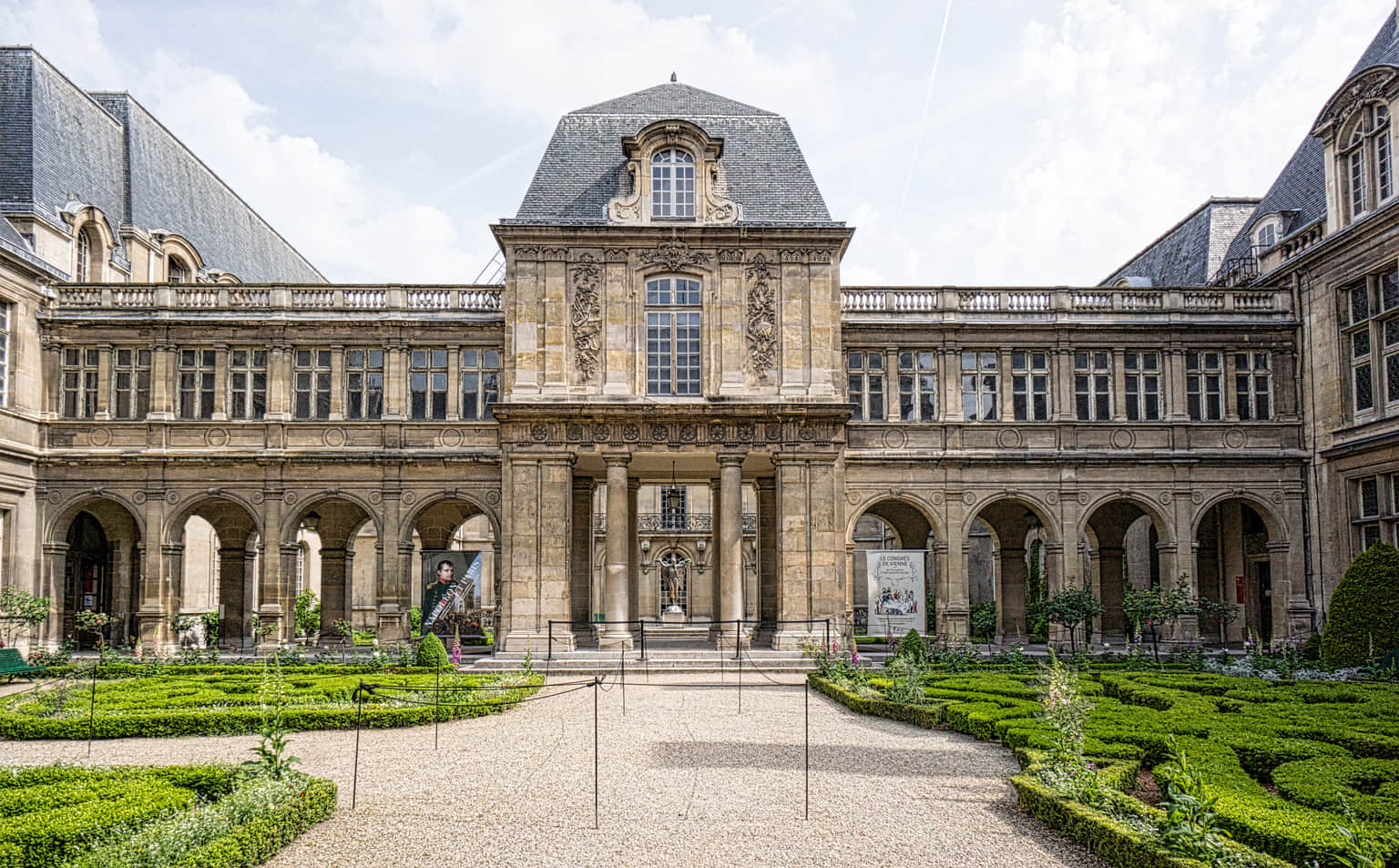
Musee Carnavalet Paris, Paris
About Musee Carnavalet Paris
Day Wise Timings
Musee Carnavalet Paris opening hours through the week.
Musee Carnavalet Paris Highlights
How To Reach Musee Carnavalet Paris
Best Time To Visit Musee Carnavalet Paris
Musee Carnavalet Paris Essential Information

Why Choose Thrillophilia?
3 Million+
Happy customers from 70+ countries all around.
4.8/5
Rated across Trip Advisor and Google reviews.
Curated With Love
Special curated Indian itineraries built for Indians.
24/7 Assistance
Always there to help before and during trips.

Point of Interest for Musee Carnavalet Paris
Collections at the Musée Carnavalet Paris
Lutetia - Prehistory and Ancient: The Musée Carnavalet Paris's lowest level (Rooms S1–S6) houses a large collection of artwork and utilitarian items discovered in Neolithic sites, including a pirogue made of a single tree (about 2700 BC), and ancient Gallo–Roman artifacts from Lutetia, including a gold coin, a bronze key, and everyday things. The gallery also showcases artifacts discovered in the 1990s at the first known permanent settlement in Paris, including carved female figurines, early pottery, wooden tools, earthenware cooking pots, and artifacts related to farming, fishing, and livestock dating between 6500 and 4500 BC.
Medieval to Renaissance Paris (5th–16th century): The exhibits and artifacts in the Medieval and Renaissance section at the Lower Level (Rooms S-7 to S-9) date from the fifth to the sixteenth centuries, starting in 451 AD. A scale model of the Île de la Cité as it appeared in 1527 is one of the outstanding exhibits in this area. The section features a collection of sculptural components, including busts of Saints and Apostles and a 14th-century sculpture of the Virgin Mary's head. A 13th-century ornate chest, a series of six stained glass windows from the Dormans-Beauvais College chapel, and 16th-century paintings of Francis I, Catherine de Medici, and Henry IV are some of the highlights of this section of the Carnavalet Musée.
The Paris of Henry IV and Louis XIV (Late 16th-17th century): This Musée Carnavalet's section features pieces of the gigantic Henry IV statue and the Louis XV statue, which formerly stood on the Pont Neuf and in the Place de la Concorde respectively and were destroyed during the French Revolution. Additionally, there are numerous artworks of students of the Royal Academy of Painting and Sculpture in this part of the Carnavalet Musée, as well as furniture made by renowned cabinetmaker Andre-Charles Boulle. The décor of two salons of the Hôtel La Rivière by the painter Charles Le Brun is also on exhibit here.
The Enlightenment (18th century): This museum's section displays two 18th-century rooms from the Hôtel de Breteuil, the Salon d'Uzès (1767) from the Hôtel d'Uzès, the Salon Demarteau, the Salon of Philosophers, and Voltaire's armchair. Famous attractions in this section include the cabinet of the Hôtel Colbert-de-Villacerf, a portrait of Cardinal Mazarin from around 1665, a painting showing the celebration of Louis XIII's marriage to Anne of Austria, various paintings of Madame de Sévigné, and her letters to her daughter.
The French Revolution (1789–1799): Some of the most notable exhibits in this Second Level (Rooms 2.51-2.57) section of the museum are the painting "Storming of the Bastille (1989)", a stone from the Bastille converted into a replica of the prison, and a buffet inlaid with Revolutionary slogans (18th c.). It houses the most extensive collection of historic objects and artifacts related to the French Revolution. This includes a cast-iron ornate stairway of honor to the upper floor and the walls adorned with mirrors and gilded woodwork of the Hôtel Le Peletier de Saint-Fargeau (18th c.), the cell at the Temple Prison where Louis XVI, Marie Antoinette, and their son were held prisoners, paintings or sculptures of major Revolutionary figures such as Danton, Mirabeau, Robespierre, and others.
Napoleon Bonaparte through Louis-Philippe (1800-1848): The portrait of Juliette Récamier by François Gérard (1805), the statue of "Victory" or "Immortality" by Louis-Simone Boizot (1806–1808), and numerous Napoleon Bonaparte possessions, including the dish and silverware case he brought on his military campaigns, and his death mask, are on display in this section. Other attractions here include paintings "The Louvre under attack during the 1830 July Revolution", "Louis Phillipe celebrates victory at the Hotel de Ville on 31 July 1830", and sculptures of Parisians from that time, some realistic depictions and caricatures.
The Paris of Napoleon III (1848-1871): Painting "Baron Hausmann présents the plan for annexing the communes surrounding Paris to Napoleon III (1859)" and the cradle of Napoleon III's son, Louis Napoleon Bonaparte (1856) are the highlights of this section.
The siege of Paris and the Paris Commune (1870-1871): This section contains images portraying the Commune during the Semaine Sanglante (21-28 May 1871) when the French Army regained the city. It includes photographs of a barricade built by the Paris Commune on March 18, 1871, as well as fires lit by the Commune on the night of May 23-24, 1871.
Paris in the Belle Epoque (1880-1914): The cultural life of Paris flourished throughout the Belle Epoque period. The first-floor corridor of the Carnavalet Musée exhibits a significant collection of paintings by renowned illustrators of Paris life at the time, including Henri Gervex, Louise Abbéma, Jean Béraud, and Carlolus-Duran. The area also features a colorful selection of posters from the era designed by Alphonse Mucha and other artists, such as the Chat Noir and Moulin Rouge cabarets. Some famous paintings by Paul-Joseph-Victor Dargaud on display include "The Assembly of the Statue of Liberty'', "The Cafe de Paris", and "The Grand Boulevards, exit of the Theatre des Varietes". This part also includes two iconic Art Nouveau rooms: a private dining room in the Art Nouveau style from the Café de Paris (1899) and the jewelry shop of Georges Fouquet, created by Alphonse Mucha (1901).
Paris in the 20th and 21st centuries: The renovated Musée Carnavalet reopened in 2021 and exhibits, for the first time, a sequence of halls dedicated to the twentieth and twenty-first centuries Paris. The displays include Marcel Proust's furniture and personal items, the Hotel de Wendel's colorful Surrealist ballroom, the desk of American art patron Gertrude Stein, an enlarged image of Stein by Man Ray, and photographs of 20th-century Paris by Eugène Atget and Henri Cartier-Bresson. There is also a painting by Leonard Foujita of a crowded café from the mid-1900s, images from 1944 documenting Paris' liberation, and a textile work called "Paris, Ville Lumiere" (1974) by artists Nil Yalter and Judy Blum, among many more.
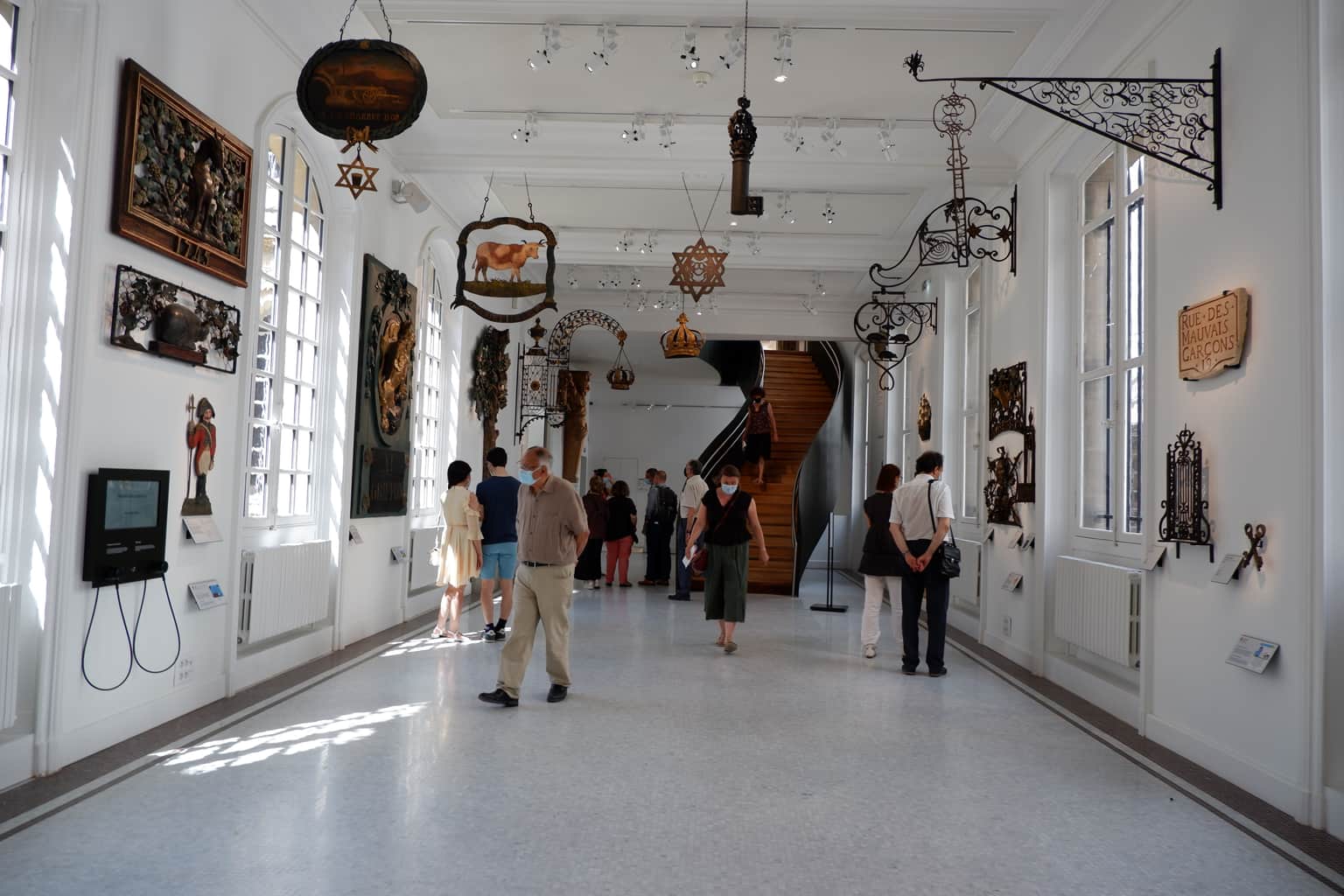
Gallery of Shop Signs: The Musée Carnavalet also has two quirky galleries with distinctive signs posted in front of Parisian establishments in the 18th and 19th centuries to denote the proprietor's type of work. These signs were employed to symbolize certain products, ranging from the black cat from Montmartre's "Le Chat Noir" cabaret (1881) and a design by the Bastille for an early 19th-century cafe to signs for locksmiths, wigmakers, and eyeglass manufacturers.
Also Check Out The Paris Food Tour To Enjoy The Multiple Cuisines That Paris Has To Offer
Musee Carnavalet Paris FAQs
Popular Related Attractions
.jpg?w=1536&q=65&format=auto)
More Things to Do in Paris
Quick links to everything else worth a slot on a longer stay.