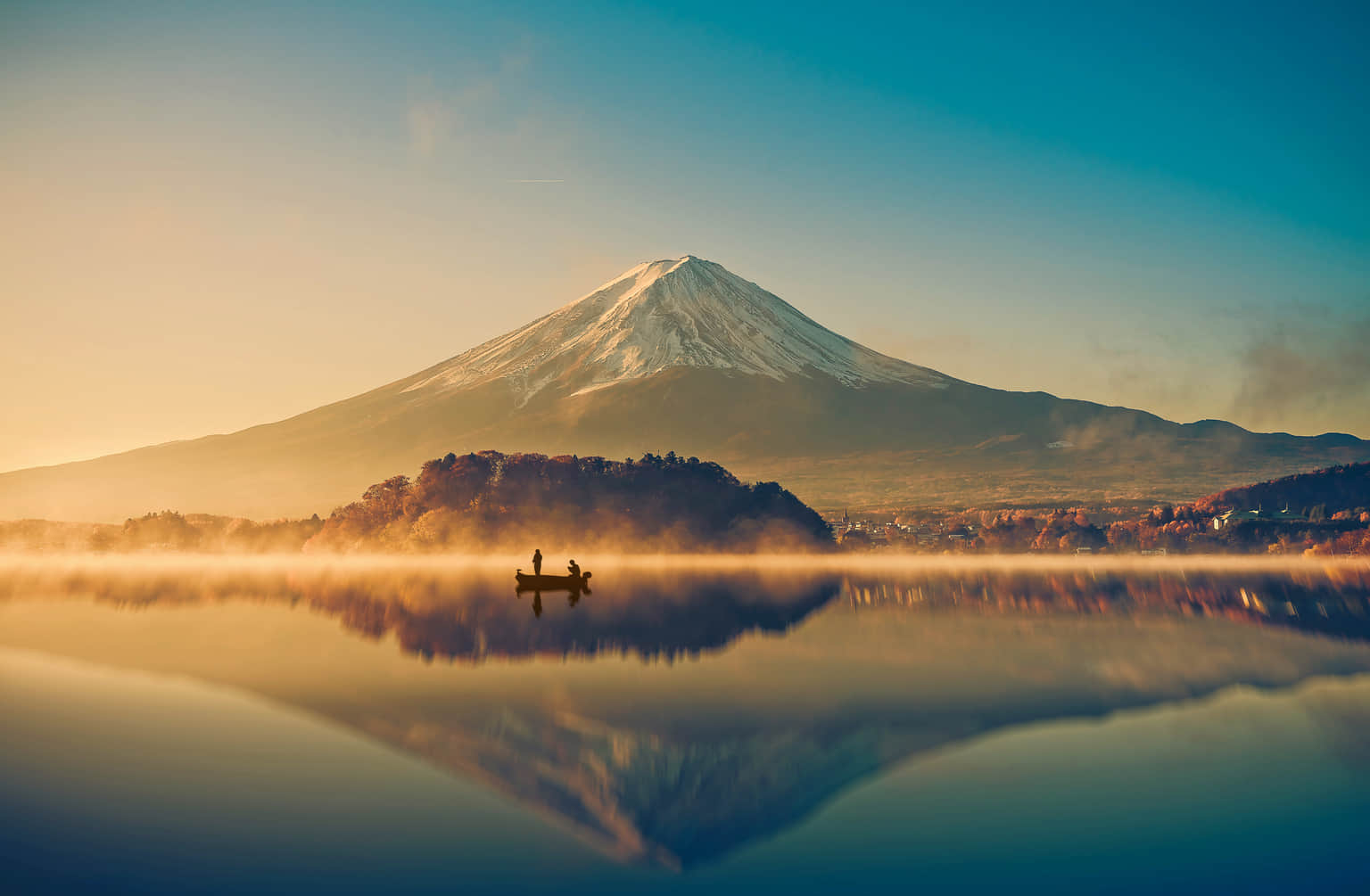
An ascend to Mt. Fuji can take up to 5-10 hours on a minimum, depending on the trail a climber takes. Most commonly, the climbers start from the Kawaguchiko 5 th Station, leading for a 5 to 6 hour climb to the summit. Also, a climber should stretch their ascend into two days in order to avoid altitude sickness. Despite a 2-day climb, the descent of the mountain is far less time-consuming. It only takes 3 or four hours.
However, one should be careful of the loose rock and pebbles that causes you to slip and fall. These falls can injure you deeply. Other than that, climbing down is going to put your physical strength and muscles to test with all the steep slopes you’re ought to face.
Trails at Mount Fuji

The Yoshida Trail is the most preferred trail by the climbers and is opted almost 70% of the time. One might want to reconsider their decision if they are tired too easily and too often because the journey uphill doesn’t get easy, for starters, you will have to cover a distance of 1,400m with temperature difference at the starting and ending points.
The trail starts at the Subaru Line 5 th Station where there are a few restaurants, gift shops that sell climbing gear, toilet facilities, and an information desk.
Fujinomiya Trail is the second most selected route and a little more difficult than Yoshida Trail. The trek starts at Fujinomiya 5 th Station, the journey gets difficult with time because of the slopes and rocky path. However, it is a rather shorter journey with mountain huts and facilities as you walk along upwards.
Subashiri Trail is an undeveloped starting point that meets the Yoshida Trails at the 8th Station. The trail is, in fact, harder than both Yoshida and Fujinomiya Trails. Lastly, Gotemba Trail is the least preferred among all four. It is considered to be the most difficult. In contrast, the Sun Abashiri or “Great Sand Run'' is the fastest descent down.






.jpg?w=1536&q=65&format=auto)