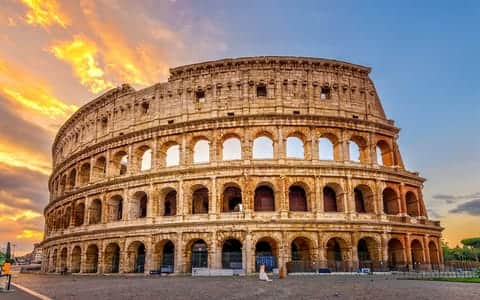
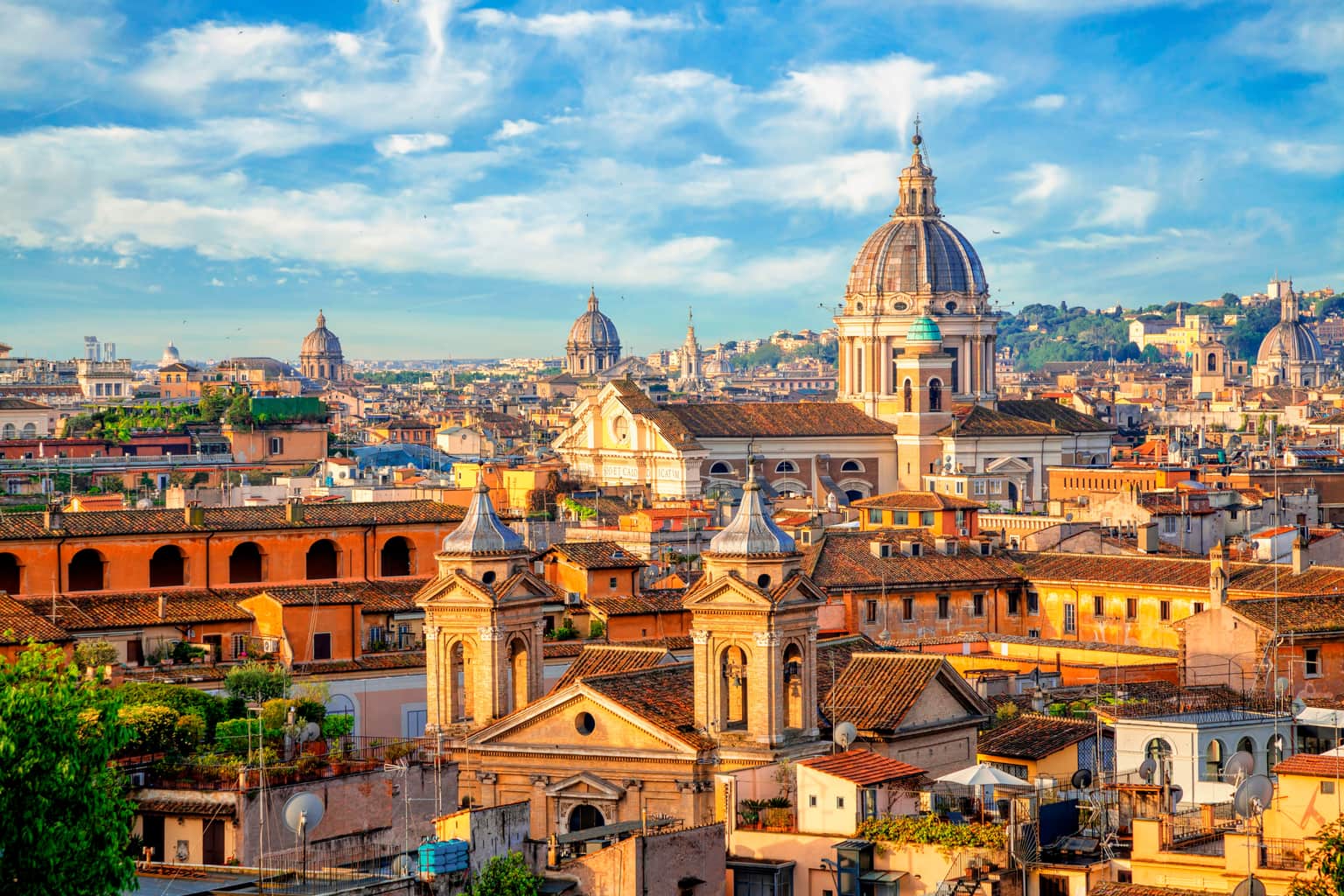
1. Location: The Colosseum is located at Piazza del Colosseo in Rome, Italy. It is located at the heart of the city just east of Roman Forum.
2. Opening Hours: It is open to the visitors on all days from 8:30 am and closes one hour before sunset between 4:30 to 7:15 depending on the time of sunset. The Colosseum is closed on 1st January and 25th December every year.
3. Tickets: The entry to the Colosseum is free for anyone below 18 years. Those belonging to European Union members and aged between 18 and 25 years have to pay €2.00. The box office tickets prices have several categories starting from €16.00.
4. Distance from Airport: The distance between the Fiumicino Airport and the Colosseum is 27.6 km and from Ciampino Airport, it is 14.5 km.
Book Now: Accademia Gallery Tickets
Origins of the Colosseum

The origin of this place dates back to the time of the Great Fire of Rome after which Emperor Nero seized the land and built his palace at this very place. The palace had an artificial lake surrounded by pavilions and gardens. The gigantic bronze Colossus of Nero stood near the entrance of the palace.
This statue was later remodeled to the likeness of the Sun God and the head of Nero was replaced several times with the heads of succeeding Emperors. When Emperor Vespasian started the construction in A.D. 70-72, his intention was to give back the area to the people of Rome after the suffering they had at the hand of Nero and his successors.
During construction, the artificial lake was filled in and the whole place along with surrounding gardens and pavilions was used for the construction of the amphitheater. The supporting buildings were constructed in the area where Nero’s palace once stood. The construction continued till A.D. 80 when his son, Emperor Titus inaugurated the place.
Emperor Domitian, Vespasian’s younger son, modified the place between A.D. 81 and 96. Domitian added the hypogeum, a series of underground tunnels. He also increased the seating capacity by adding a gallery to the top of the amphitheatre.
Recommended Read:Things To Do In Rome
History of the Colosseum

Emperor Titus had inaugurated the place in A.D. 80 with a festival which continued for 100 days with various games. The amphitheatre could host 50,000 to a maximum capacity of 87,000 spectators a day. An average of 65,000 spectators would gather on a day to watch gladiatorial combats, hunts, wild animal fights, enactments of famous battles and later, dramas from classical mythologies.
Over the centuries, the place was ruined and restored several times. The place caught fire in 217 and was repaired between 240 and 320, again suffered an earthquake in 443 and restored. In between, the place became a regular hunt for stone robbers and thieves who made further damages.
Initially created for entertainment, in the 12th century, the amphitheatre was used as a fortress by the Frangipani family and a part was converted into housing and workshops. In 1349, the place suffered another earthquake and was badly damaged and again restored and restructured.
Later on, between 14th to 17th century, it was converted into a sacred site by Christians and in 1749, the place became a Christian Shrine. In recent years, a major restoration program was done between 1993 and 2000 and the place was converted into a tourist attraction.
Also Read: Museums In Rome
Architecture of the Colosseum

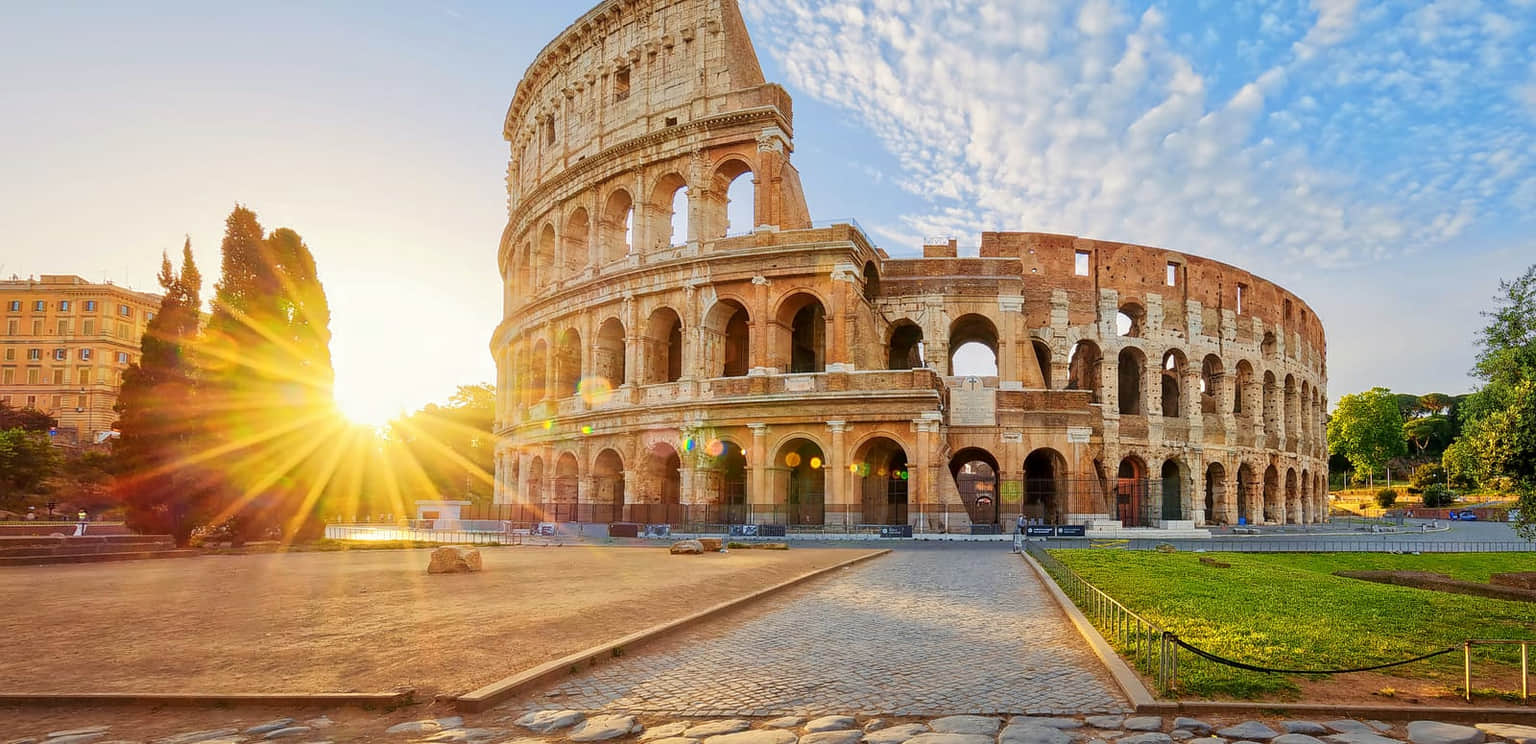
The amphitheater's basic interior and exterior architecture is like two roman theatres standing back to back. It is a freestanding structure and elliptical in plan. With a length of 189 meters and a width of 156 meters, the place is spread across 24,000 square meters(6 acres) with a height of 48 meters and a perimeter of 545 meters.
The central arena is oval having an 87 meters length and 55 meters width. There is a 5 meters wall surrounding the arena from which seating arises in tiers. The central arena is a wooden floor covered with sand. Beneath the floor is the hypogeum which is the underground series of tunnels earlier used for housing animals and slaves.
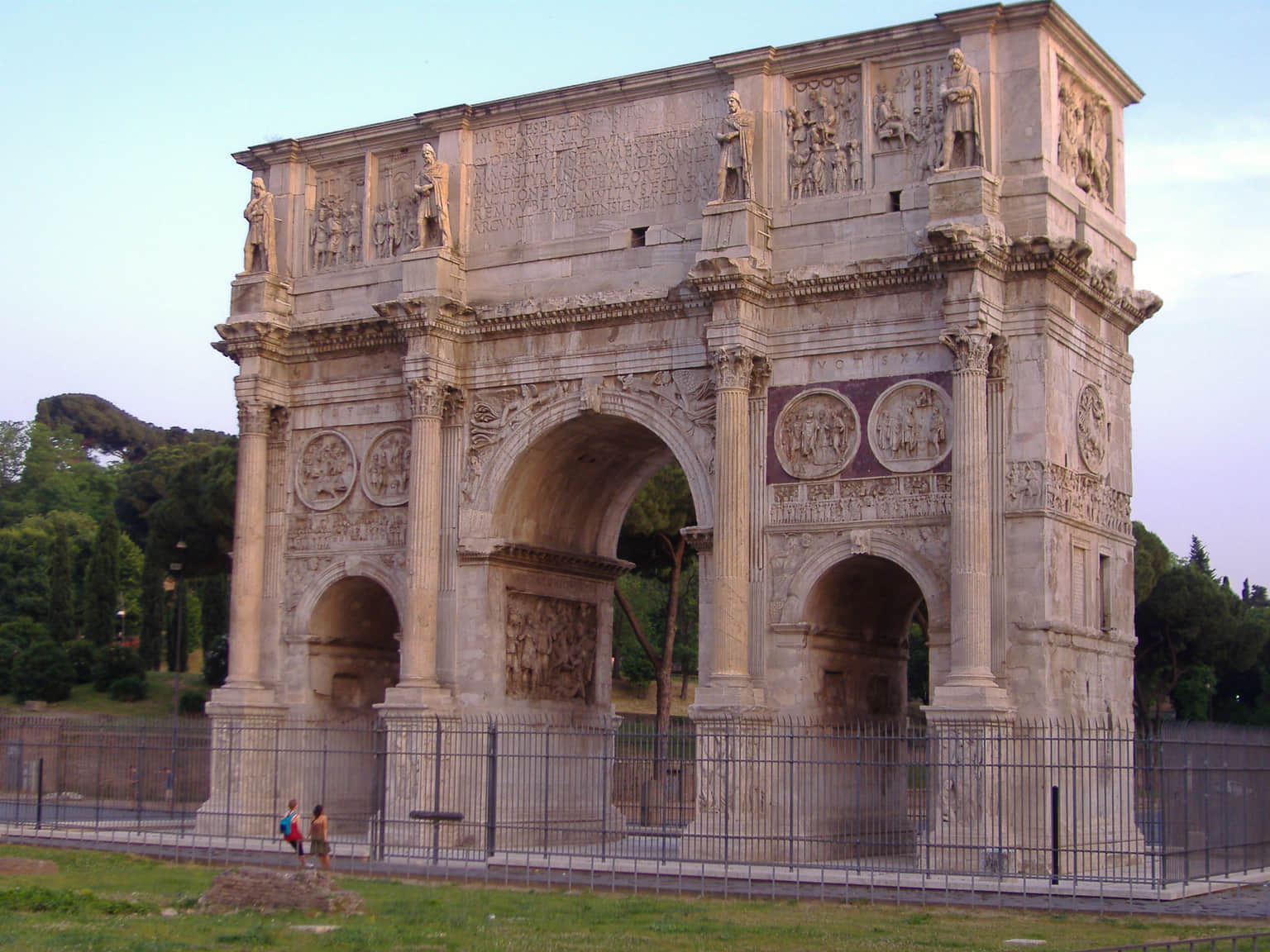
There are 3 tiers of seating having arched entrances from eight sides.There are four decorated axials at four sides of the colosseum. The axial, at the main entrance, is named as Arch of Constantine, in memory of Constantine’s history over Maxentius at Pons Milvus.
Each of the stories contains columns of different styles with simple Doric style at bottom, Ionic in middle and ornate Corinthian order at the top. Each tier is divided into sections by curved passages and low walls. Also, the arches of the second and third-tier arcade had framed statues.
Book Now: Accademia Gallery Tickets
Tips for visiting Colosseum

- On every 1st Sunday of the month, the Colosseum is open to the public for free and has up to 30,000 visitors those days.
- In the Colosseum, heavy backpacsuitcasesitcase/trolleys are not allowed although small backpacks are allowed. All bags are checked with metal detectors before enteringTip.
- The Colosseum only allows 3000 people at the same time due to security reasons.
- Since there is a long walk involved, visitors need to wear comfortable shoes and also carry hats or caps to cover the head, especially during summer
- Try to reach the venue early in the morning as soon as it opens for visitors to avoid the crowds and explore in relative peace
- Book your tickets online to save time that you would otherwise spend waiting in long queues in the heat
- The easiest and fastest way to reach the Colosseum is by metro with a station near the site
- Be wary of your belongings as there might be pickpockets around, especially during the busiest hours
- Stay on till the evening to witness the breathtaking sight of the Colosseum when illuminated
Do Read: Unusual Things To Do In Rome

.jpg?w=1536&q=65&format=auto)






.jpg?w=1536&q=65&format=auto)